
Caddo Parish Arrest Records and Charges
Arrest records are created by law-enforcement and jail channels. In Caddo Parish, that often means the Caddo Parish Sheriff's Office, a city police agency, or another arresting agency. The arrest side may show a name, booking date, jail location, agency, charge description, bond amount, and custody status. For current custody, use the Caddo Parish inmate records page and the official sheriff roster. For active warrants, use the sheriff warrant list and the Caddo Parish warrant records page.
Court charge records are different. They begin when the prosecutor files, accepts, amends, or dismisses charges in a court case. The Caddo Parish District Attorney prosecutes criminal cases for Caddo Parish and the First Judicial District, while Shreveport City Court handles many city criminal and traffic matters. Once the charge is filed with a court, the record may appear in the clerk's criminal inquiry, a court docket, the DA criminal case search, or a written clerk copy response.
The Louisiana law-enforcement record statute is central to the arrest side because it restricts some law-enforcement and prosecutive records but preserves public exceptions for certain arrest, booking, summons, citation, and charging records.
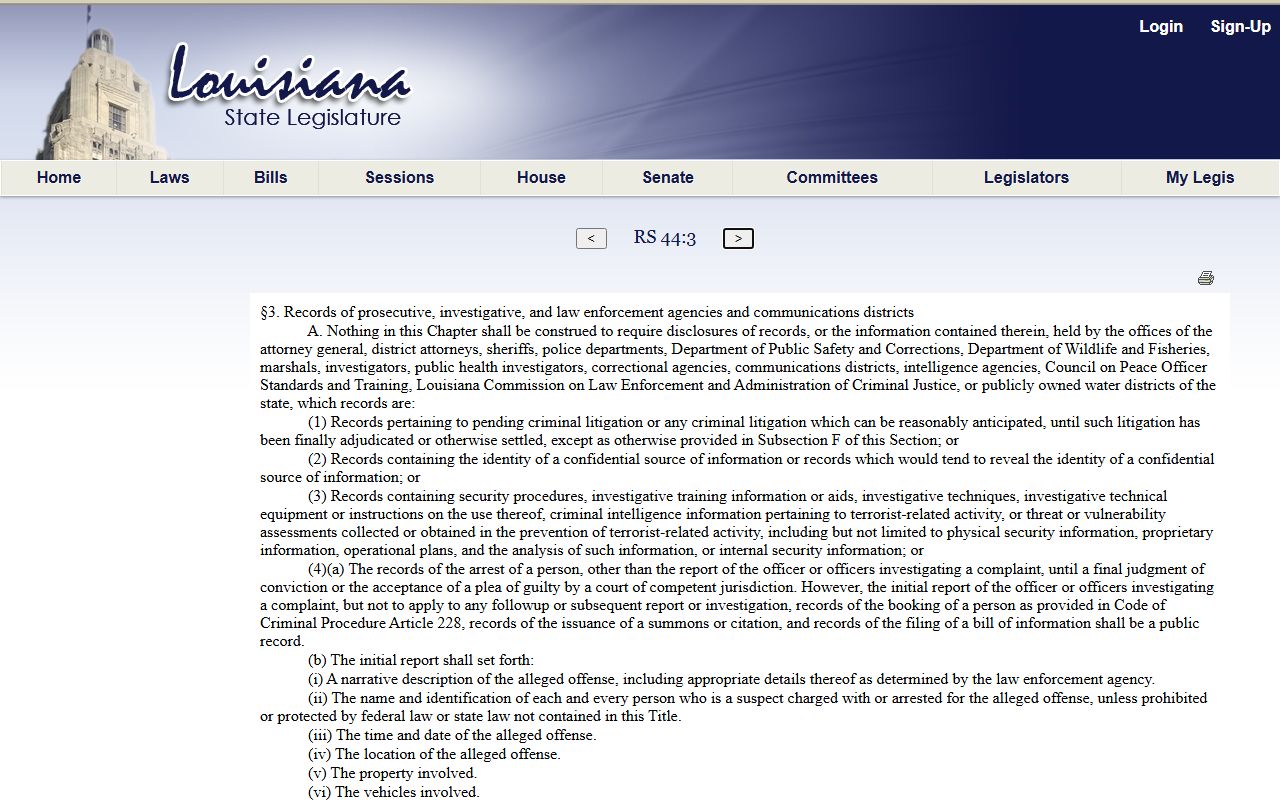
That statute explains why some details may be public at the arrest or charging stage while investigative material remains withheld.
Search Caddo Arrest Records
The best Caddo Parish arrest records search path depends on the question. For current jail custody, start with the Caddo Sheriff current-inmate list. For filed court charges, use Caddo Clerk Web Inquiry, Clerk Connect, or the Caddo DA criminal case search. For city tickets or city criminal matters, check Shreveport City Court rather than assuming the district-court index has the case.
- Check custody first if the issue is a recent arrest, booking, jail location, bond, or release status.
- Search the clerk or DA case tools by defendant name or docket number when the goal is to find charges filed in court.
- Read each charge line with the case status, court section, hearing entries, and disposition before drawing a conclusion.
- Use written public-record requests when the online index lacks images, older records, or certified copies.
- Confirm Shreveport Police tickets and city criminal matters with Shreveport City Court.
The district court record is the better place to verify whether charges after arrest became a formal case, were amended, or ended in a plea, dismissal, or sentence. The Caddo Parish criminal court records page covers the full case file and final outcome.
Charges After Arrest
Charges after arrest can arrive in more than one form. Louisiana criminal cases commonly use a bill of information filed by the prosecutor or an indictment returned by a grand jury. A complaint, summons, citation, or warrant record may also appear earlier in the process. The important point is that an arrest is not the same thing as a filed charge, and a filed charge is not the same thing as a conviction.
| Complaint | Bill of Information | Indictment | |
|---|---|---|---|
| Filed By | Officer or prosecutor, depending on matter | Prosecutor | Grand jury |
| Common Use | Early accusation, citation, or lower-court matter | Many district criminal charges | Serious felony charges |
| Record Role | May start or support the case | States formal charges accepted by the DA | States charges returned by the grand jury |
The Louisiana expungement definitions statute is useful here because it treats arrest and conviction records as legal categories with different effects.
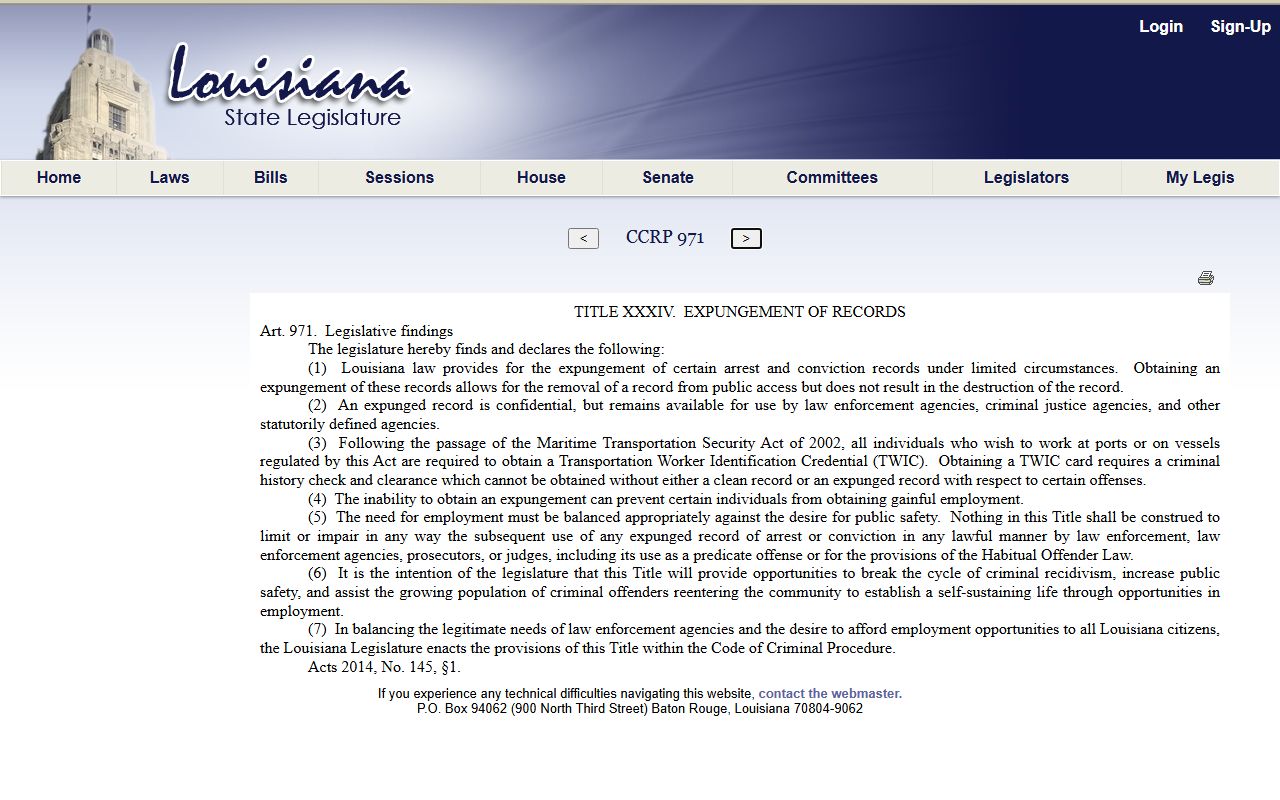
The distinction matters when a person is trying to understand whether an arrest, a filed charge, or a conviction remains visible.
Caddo Court Charge Status
Charge status can change during the case. A charge may be pending after filing, amended to a different offense, reduced through plea negotiation, dismissed by the court, or nolle prosequi by the prosecutor. One arrest can also produce several charge lines, and those charge lines can end in different ways. Read the docket entries, minutes, and disposition fields together.
| Status | What It Means |
|---|---|
| Pending | The charge is open and has not reached final disposition. |
| Amended / Reduced | The original charge was changed, often by prosecutor action, plea agreement, or court order. |
| Dismissed | The charge was ended by court action and did not result in a conviction on that count. |
| Nolle Prosequi | The prosecutor declined to proceed on the charge, subject to legal limits and case facts. |
The Louisiana expungement confidentiality statute explains that some records removed from public access can remain available to courts, prosecutors, law enforcement, and other listed users.
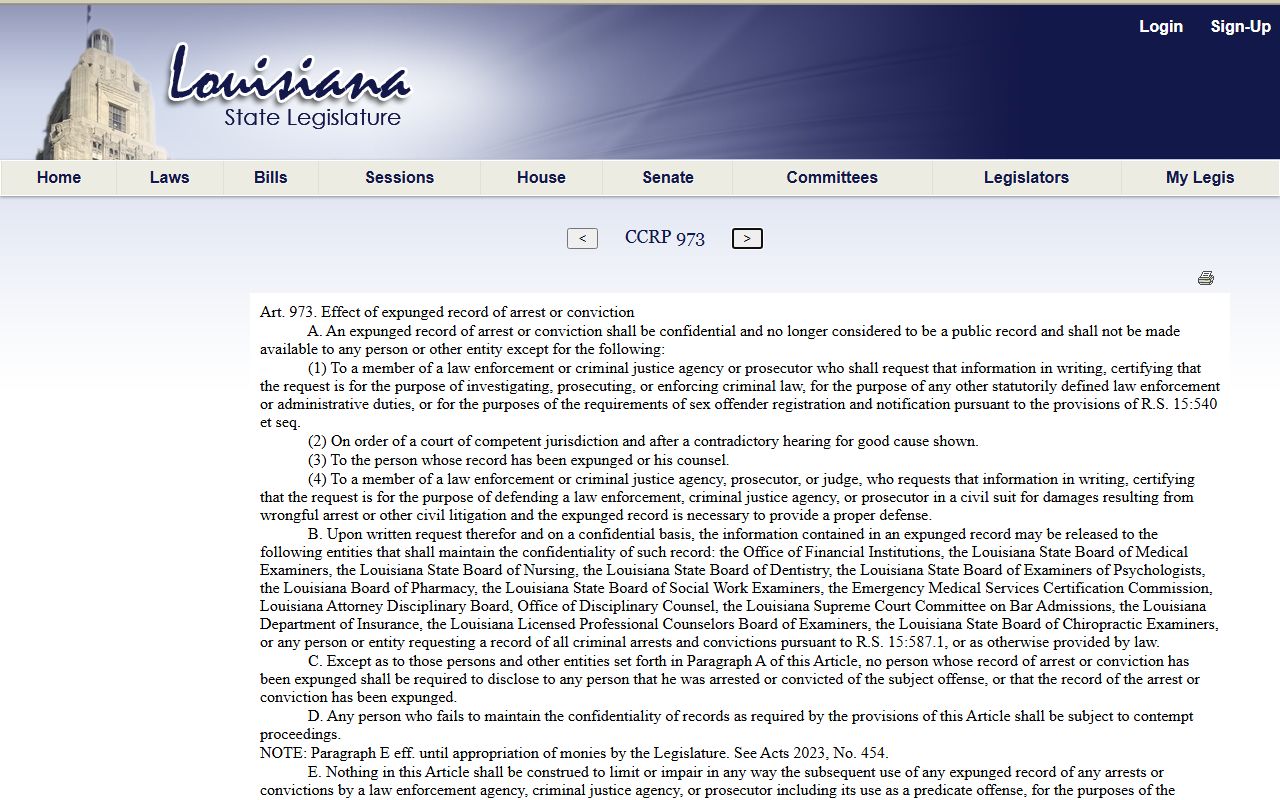
That rule prevents a public search result from being the only measure of whether a record still exists for official use.
Charges vs Convictions
A Caddo Parish arrest record, a court charge record, and a conviction record answer different questions. Arrest records address custody or law-enforcement action. Charge records show what was filed or accepted in court. Conviction records show the final finding or plea of guilt. Treating all three as one thing can lead to wrong conclusions, especially when a case has several counts or a later expungement order.
| Charge | Conviction | |
|---|---|---|
| Stage | Accusation after arrest, summons, citation, or prosecutor filing | Final plea or finding of guilt |
| Proof | Probable cause or charging decision | Guilty plea or proof beyond a reasonable doubt |
| Outcome | Can be pending, amended, reduced, or dismissed | Can lead to sentence, probation, costs, or appeal |
Louisiana Public Records Law still controls access. La. R.S. 44:31 creates the general inspection and copy right, and La. R.S. 44:32 addresses custodian duties, fees, and request handling. Those laws do not override every confidentiality rule.
Sealed and Expunged Charges
Expungement is a major issue for arrest records and charges after arrest. Louisiana Code of Criminal Procedure article 971 says expungement removes qualifying arrest or conviction records from public access without destroying them. Article 973 makes expunged records confidential while preserving access for courts, prosecutors, law enforcement, the subject, counsel, and other listed users. Caddo Clerk criminal costs include nonrefundable expungement costs for the clerk, Louisiana BCII, sheriff, and DA.
| Sealed | Expunged | |
|---|---|---|
| Public Search | Hidden or limited by court order | Removed from ordinary public access |
| Record Status | Still exists under access limits | Still exists for statutory users |
| Common Trigger | Court order, juvenile law, sensitive evidence | Qualifying arrest, charge, or conviction under Louisiana procedure |
The Louisiana State Police BCII expungement resource explains the state criminal-history side of court-ordered expungements.
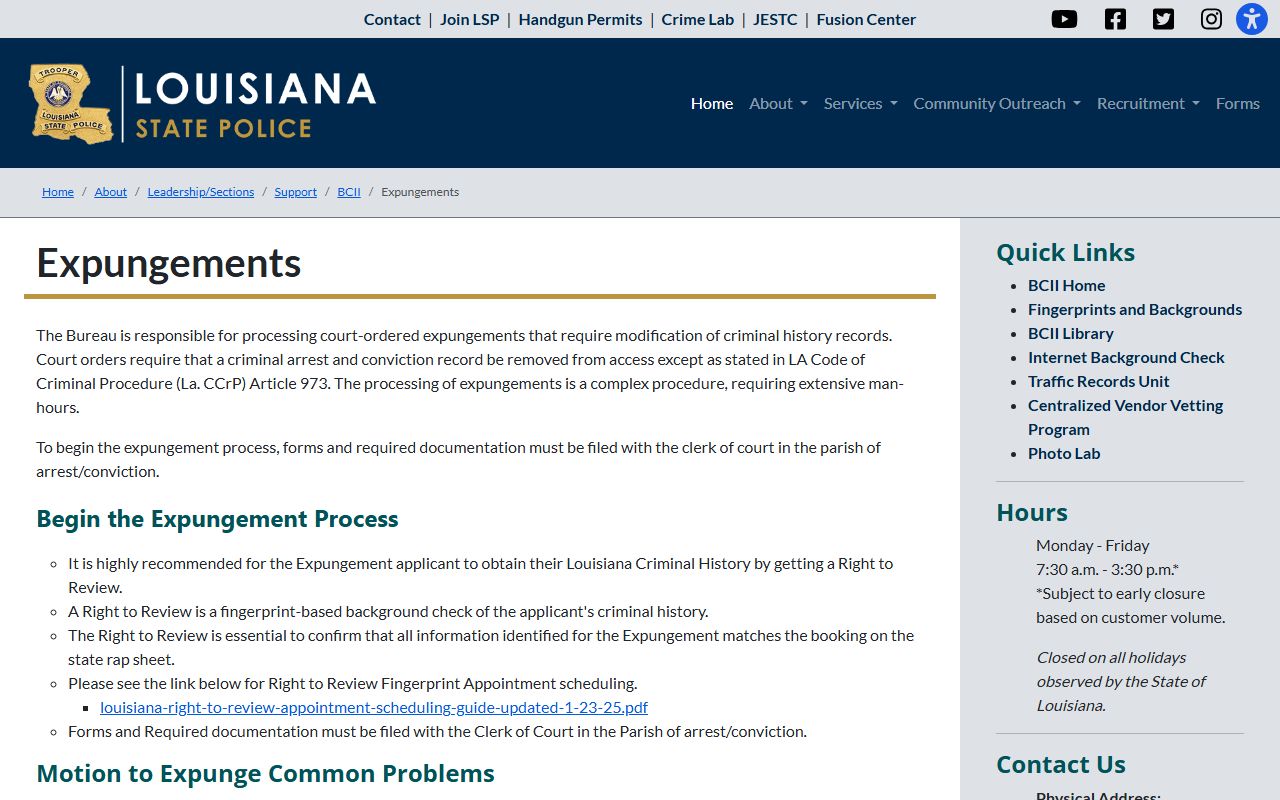
BCII involvement is why a Caddo Parish expungement can require action beyond a single local court filing.
Charge Codes and Severity
Charge records often include descriptions, offense codes, docket numbers, issuing agencies, bond, and court action. Sheriff warrant records in Caddo Parish can show offense sequence number, offense code, charge description, warrant type, issuing agency, and bond or amount owed. Court records add filings, minutes, hearing dates, pleas, dispositions, and sentencing information. Use the code and description together because a shorthand charge label may not explain the full count.
Severity also depends on the court. Felony cases usually belong in the district court criminal division. City ordinance, misdemeanor, and city traffic matters may route to Shreveport City Court. State traffic citations handled by the DA traffic division follow a separate payment and appearance path, while Shreveport Police tickets are routed to city court. A Caddo Parish arrest records search should therefore include the agency and court before assuming where the charge belongs.
The automated expungement statute created a 2025 framework for eligible automated expungement requests through Louisiana BCII, Louisiana Supreme Court CMIS, and district clerks where data is available.
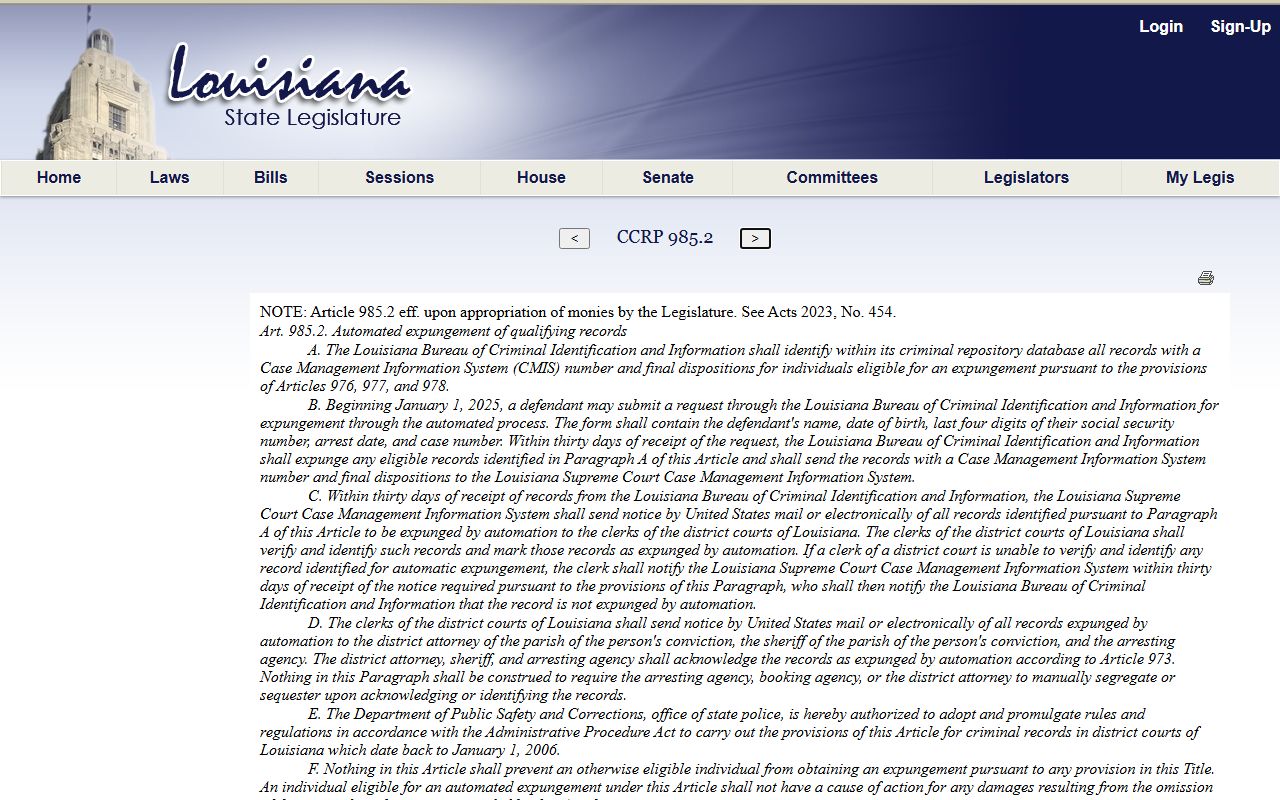
That reform is relevant to charge records because eligibility can depend on whether the record is an arrest, charge, dismissal, or conviction.
DA and Defender Roles
The Caddo Parish District Attorney's Office is at 501 Texas Street, 5th Floor, Shreveport, LA 71101, phone 318-226-6826, and email info@caddoda.com. The DA's criminal division notes that Caddo court-date or record questions go to the Caddo Clerk, while Shreveport City Court case information goes to the Shreveport City Clerk of Criminal Court at 318-673-5830. The DA appellate division identifies public-record custodian contacts for prosecutor records.
The Caddo Parish Public Defender Office represents financially eligible defendants in district, juvenile, and city court. Its administrative office is at 400 Travis Street, Suite 2000, Shreveport, LA 71101, with a district office phone of 318-221-2220. This role does not make the defender the keeper of arrest or charge records, but it helps explain where defendants may get counsel before arraignment, plea, trial, or expungement issues.
The Caddo DA 2025 caseload update cited 6,962 adult criminal non-traffic filings and 60 jury trials in 2024.
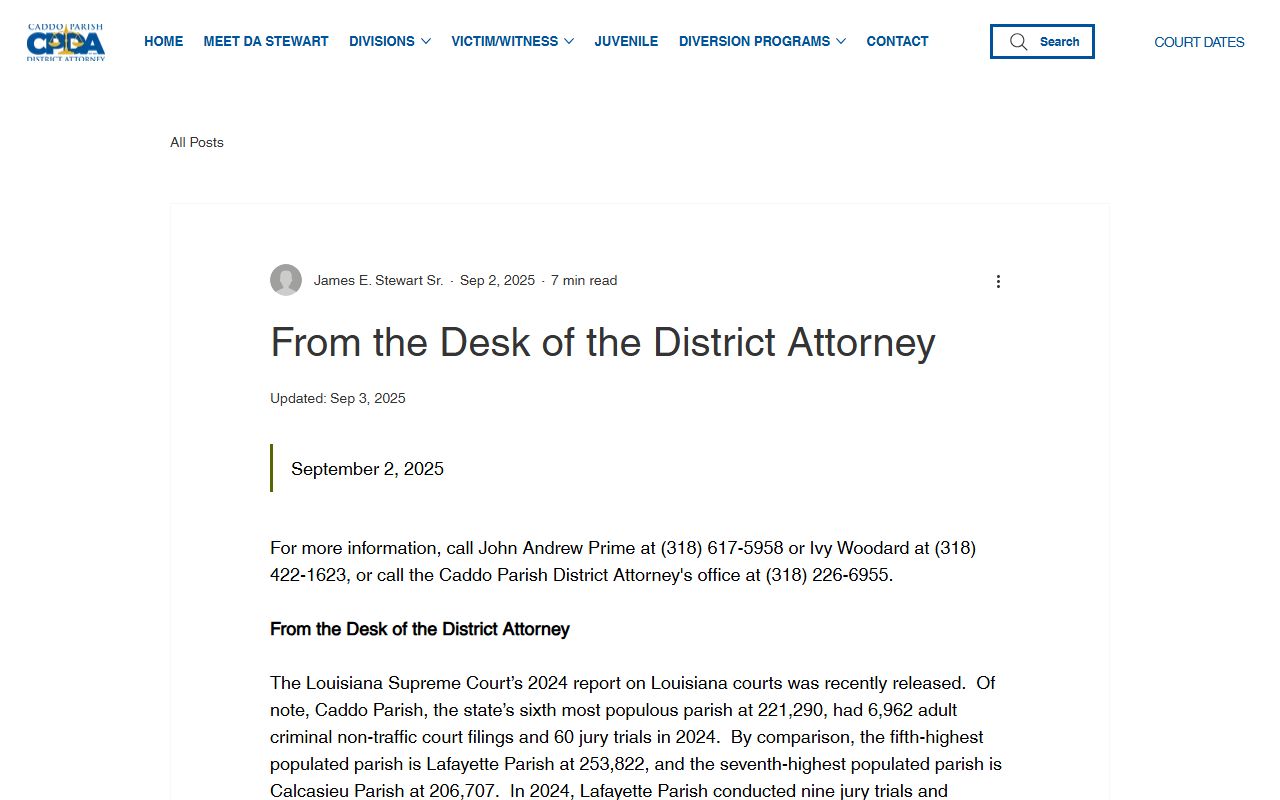
Large annual filing volume makes it important to confirm the docket number, date of birth when available, agency, and court before relying on a name match.
Restricted Caddo Charge Records
Juvenile records are confidential under Louisiana Children's Code article 412 except for traffic violations and specific authorized disclosures. Law-enforcement files may be restricted during an investigation or prosecution. Sex-offense and human-trafficking victim identity and contact information are protected. Social Security numbers, financial account numbers, minor names, sealed filings, and domestic-violence victim address details are not normal public display items.
For an official copy, use the custodian that holds the record. The clerk handles court filings and certified copies. The sheriff handles jail, warrant, and sheriff records. The DA handles prosecutor records. Shreveport City Court handles city cases. If a record is sealed, expunged, or juvenile, a normal public search may return nothing even when a confidential record remains available to authorized users.
Important: This website is not a consumer reporting agency and court information may not be used for FCRA-regulated decisions.